- A sagging door is most often caused by loose or stripped hinge screws, especially at the top hinge, and fixing those should always be the first step.
- Longer screws in the top hinge can pull the door back into alignment by anchoring it to the wall framing instead of just the trim.
- Shimming or carefully bending hinges allows for fine-tuned adjustments without removing material from the door.
- A door that won’t latch properly may need strike plate adjustment even after the sag is fixed.
- Planing or sanding the door should be a last resort and only done after hinge and alignment issues are addressed.
- Small, gradual adjustments with frequent testing are more effective than making multiple changes at once.
A sagging door is one of those home problems that starts small and gets annoying fast. One day it lightly brushes the frame. A week later, you’re forcing it shut or lifting it just to get the latch to catch. The good news is that in most cases, you don’t need to replace the door, the frame, or call in a pro. You just need to understand why the door is sagging and apply the right fix.
This guide walks you through exactly how to fix a sagging door that rubs or won’t close properly, using straightforward steps and common tools. Whether the issue is loose hinges, a shifting frame, or simple wear and tear, you’ll find a solution that works.
Why Is Your Door Sagging in the First Place?
Before you start tightening screws or shaving wood, it’s important to understand what’s causing the problem. Fixing the wrong thing can make the door worse.
Common reasons doors sag include:
- Loose or stripped hinge screws
- Heavy doors pulling away from the frame over time
- Settling of the house or foundation
- Humidity causing wood expansion
- Hinges that were improperly installed
- Warped doors or frames
In most homes, the top hinge is the main culprit. Gravity pulls the door downward, and over time the top hinge loosens slightly, causing the door to tilt and rub.
How Do You Know If a Door Is Sagging or Something Else Is Wrong?
Not every door that rubs is sagging. Here’s how to tell the difference.
Signs your door is sagging:
- The door rubs on the latch side near the top
- The gap between the door and frame is uneven
- You have to lift the door to close it
- The latch no longer lines up with the strike plate
Signs it might be another issue:
- The door sticks along the entire edge (humidity-related)
- The door rubs only at the bottom (possible floor or hinge placement issue)
- The latch aligns but the door still won’t close (strike plate issue)
If the top corner on the latch side is rubbing, you’re almost certainly dealing with sag.
Tools You’ll Likely Need
You don’t need a full workshop to fix a sagging door. Most repairs can be done with basic tools.
Common tools include:
- Screwdriver or drill
- Longer wood screws (2–3 inches)
- Hammer
- Wood shims or thin cardboard
- Level
- Pencil
- Utility knife
- Sandpaper or a hand plane (optional)
Have everything ready before you start so you don’t leave the door half-fixed.
Step One: Check the Hinges Closely
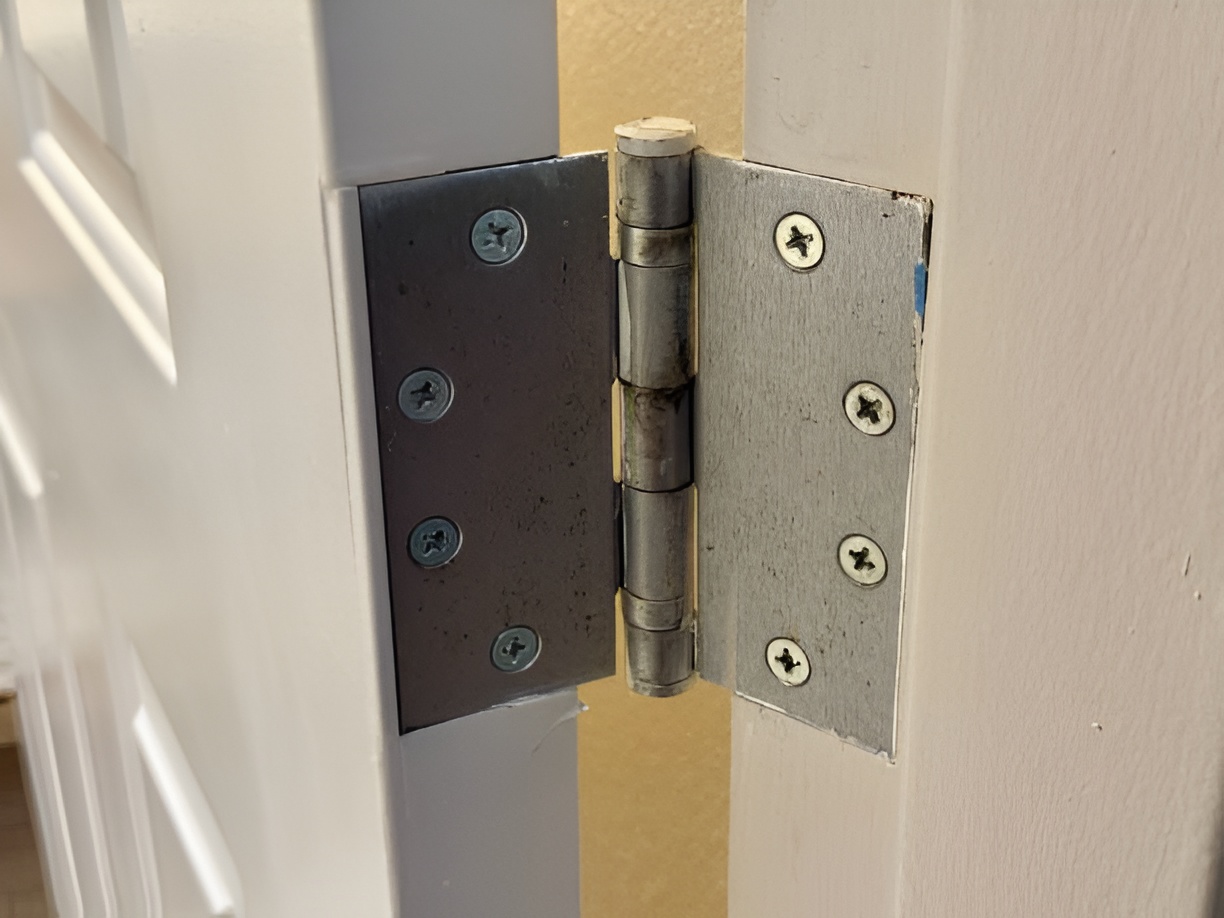
Start with the simplest and most common fix. Stand in front of the door and look at the hinges.
Ask yourself:
- Are any screws sticking out?
- Do the hinges wiggle when you move the door?
- Are the hinges bent or damaged?
Even slightly loose screws can cause a door to sag enough to rub.
Tighten All Hinge Screws First
Using a screwdriver or drill:
- Tighten every screw on all hinges
- Start with the top hinge
- Avoid overtightening and stripping the screw head
Once everything is snug, test the door. In many cases, this alone fixes the issue.
What If the Screws Just Spin and Won’t Tighten?
This is extremely common, especially in older homes. When screws spin freely, the wood inside the frame has worn out.
Fix Stripped Hinge Screw Holes
Remove one loose screw at a time and try one of these methods:
- Insert wooden toothpicks or matchsticks dipped in wood glue
- Push them in tightly, snap them off flush
- Reinsert the screw and tighten
For a stronger fix:
- Use a wooden dowel and wood glue
- Let it dry before reinstalling the screw
Test the door again after fixing the top hinge screws.
Use Longer Screws to Pull the Door Back into Alignment
If tightening the screws doesn’t solve the problem, longer screws often will.
Why Longer Screws Work
Most hinge screws only go into the door frame trim, not the wall framing behind it. Longer screws reach the wall stud and pull the door back into position.
How to Install Longer Screws
- Replace one screw at a time in the top hinge
- Use 2–3 inch wood screws
- Drive the screw straight and snug, not overly tight
You’ll often see the door lift slightly as you tighten the screw. That’s a good sign.
Check the Door Alignment After Each Adjustment
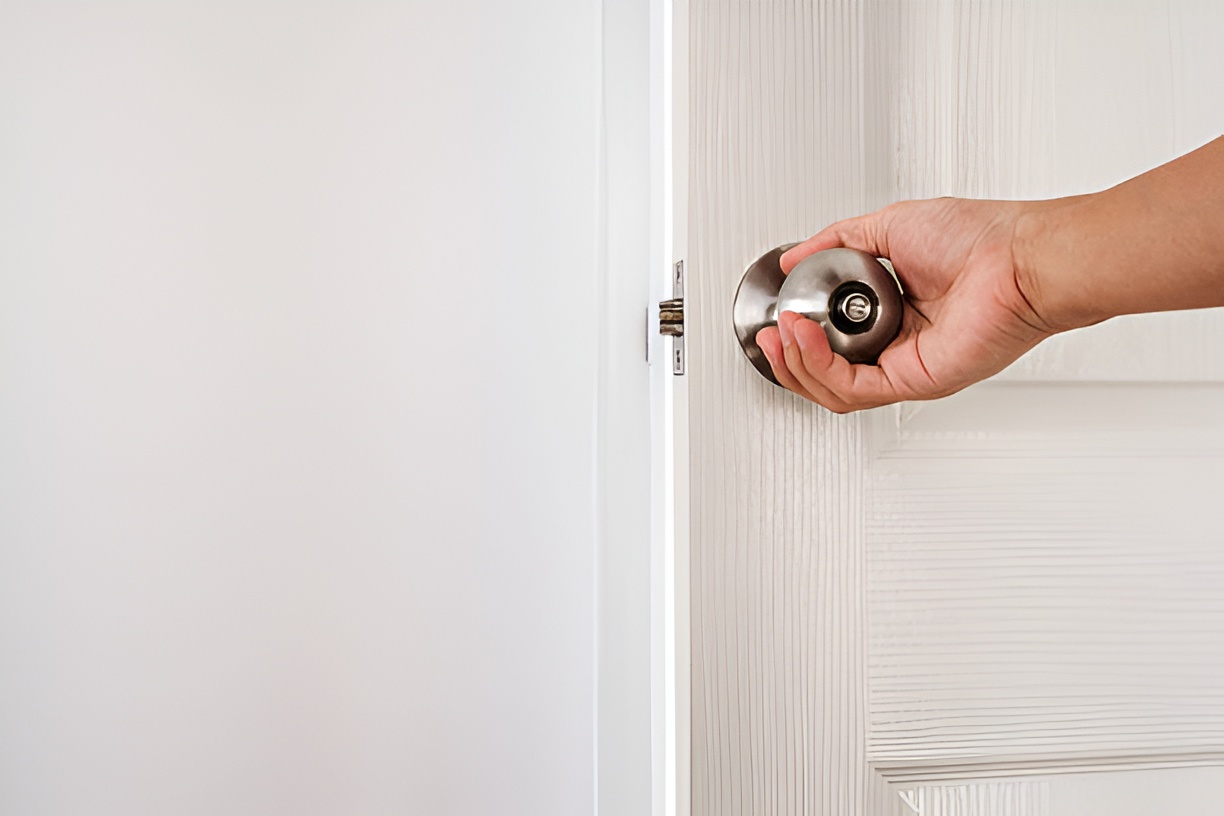
Don’t rush through all the steps at once. After each fix:
- Open and close the door
- Watch where it rubs
- Check the latch alignment
Small adjustments make a big difference.
How to Fix a Sagging Door Using Shims
If hinge screws aren’t enough, hinge shimming can fine-tune the alignment.
When Should You Shim a Hinge?
Shimming helps when:
- The door tilts toward the latch side
- The top latch corner rubs the frame
- Hinges are installed slightly too deep
How to Shim the Bottom or Middle Hinge
- Remove the hinge pins or unscrew the hinge leaf from the frame
- Insert thin cardboard, wood veneer, or commercial shims behind the hinge
- Reattach the hinge and test the door
Adding shims behind the lower hinge can push the bottom of the door outward and lift the sagging corner.
Can You Bend the Hinges to Fix a Sagging Door?
Yes, carefully. This is an old-school trick that works surprisingly well.
How Hinge Bending Works
Bending changes the hinge angle slightly, correcting alignment without removing material.
How to Bend a Hinge Safely
- Remove the hinge pin
- Place a wrench over the hinge knuckles
- Gently bend the hinge inward or outward
- Reinsert the pin and test
Go slowly. Small movements make a big difference, and overbending can cause new problems.
Check the Strike Plate and Latch Alignment
Sometimes the door is mostly fine, but the latch won’t engage.
How to Tell If the Strike Plate Is the Problem
- The latch hits above or below the strike plate opening
- The door closes but won’t latch
- You see metal wear marks on the strike plate
Adjusting the Strike Plate
- Loosen the strike plate screws
- Shift it slightly up or down
- Retighten and test
If needed:
- File the strike plate opening slightly
- Replace it with an adjustable strike plate
This step doesn’t fix sagging, but it can solve closing issues after alignment improves.
What If the Door Still Rubs After Hinge Fixes?
If hinges aren’t solving the problem, the door or frame itself may be the issue.
Check for Warped Doors
Look down the edge of the door:
- Is it twisted?
- Does it bow inward or outward?
Warped doors may need planing or replacement if severe.
Check for Frame Issues
- Use a level on the door frame
- Look for uneven gaps
- Check for cracked or loose trim
Minor frame shifts can often be compensated for with hinge adjustments.
How to Plane or Sand a Door That Rubs
If the door only rubs slightly and alignment is mostly correct, removing a small amount of material can help.
When Planing Makes Sense
- The door rubs evenly along one edge
- Seasonal humidity causes swelling
- Hinges are secure and aligned
How to Plane Safely
- Mark the rubbing area with a pencil
- Remove the door
- Plane or sand a small amount at a time
- Rehang and test frequently
Remove as little material as possible. You can always take more off, but you can’t put it back.
Fixing Sagging Doors in Older Homes
Older houses often have unique challenges.
Common issues include:
- Non-standard door sizes
- Settled framing
- Multiple layers of paint on hinges
- Weakened wood around screws
Be patient and expect to combine several fixes. Longer screws and shimming are especially effective in older homes.
Preventing a Door from Sagging Again
Once the door works properly, take steps to keep it that way.
Preventative tips:
- Tighten hinge screws once a year
- Use longer screws in top hinges
- Avoid slamming doors
- Control indoor humidity
- Fix small rubbing issues early
A few minutes of maintenance can save hours of frustration later.
When Should You Call a Professional?
Most sagging doors are DIY-friendly, but some situations call for help.
Consider a pro if:
- The frame is severely out of square
- The door is badly warped
- Structural settling is ongoing
- The door is custom or historic
A carpenter can assess whether repair or replacement makes more sense.
Common Mistakes to Avoid
Fixing a sagging door is simple, but mistakes can cause new problems.
Avoid these:
- Removing too much material from the door
- Ignoring the top hinge
- Overtightening screws and stripping holes
- Making multiple changes at once
- Assuming the door is the problem without checking the frame
Slow, deliberate adjustments work best.
Frequently Asked Questions About Fixing a Sagging Door
Can a sagging door fix itself over time?
No. Sagging usually gets worse unless addressed.
How long does it take to fix a sagging door?
Most fixes take 15 to 45 minutes.
Should I replace the hinges?
Only if they’re damaged or bent beyond repair.
Does humidity really affect doors?
Yes. Wood expands and contracts with moisture, affecting alignment.
Is it okay to sand instead of fixing hinges?
Only if the alignment is otherwise correct.
Final Thoughts
A sagging door might feel like a big problem, but in reality it’s usually a small mechanical issue with a simple fix. By starting with the hinges, using longer screws, making minor adjustments, and checking alignment step by step, you can restore smooth operation without replacing the door.
The key is patience. Make one change at a time, test often, and stop as soon as the door closes cleanly. With the right approach, fixing a sagging door that rubs or won’t close properly is well within reach for any homeowner.