Water leaking behind your gutters is a frustrating and often confusing problem for homeowners. Gutters are designed to collect and redirect rainwater away from your roof and foundation, but when water starts slipping behind them instead of flowing through them, it’s a clear sign something isn’t working as it should. While the issue might seem minor at first, it can quickly lead to mold growth, fascia board rot, landscape erosion, and interior water damage if left unaddressed. Understanding what causes this problem is the first step toward finding an effective solution. In many cases, timely roof repair plays a major role in correcting the underlying issues.
Below is a detailed look at why water may be leaking behind your gutters and what homeowners can do to fix and prevent the problem.
Missing or Damaged Drip Edge Flashing
One of the most common reasons water leaks behind gutters is the absence of drip edge flashing. This L-shaped metal piece sits beneath the roofing material and extends over the gutter, ensuring water flows directly into the trough rather than down the fascia board.
Without a drip edge:
-
Rainwater can run behind the gutter
-
Fascia wood becomes saturated and begins to rot
-
Shingles may deteriorate faster due to moisture exposure
Installing or replacing damaged drip edge flashing is a simple but essential roof repair that protects both the roof edges and gutter system. If your home is older, it may have been built before drip edges became standard, making an upgrade even more important.
Improper Gutter Installation
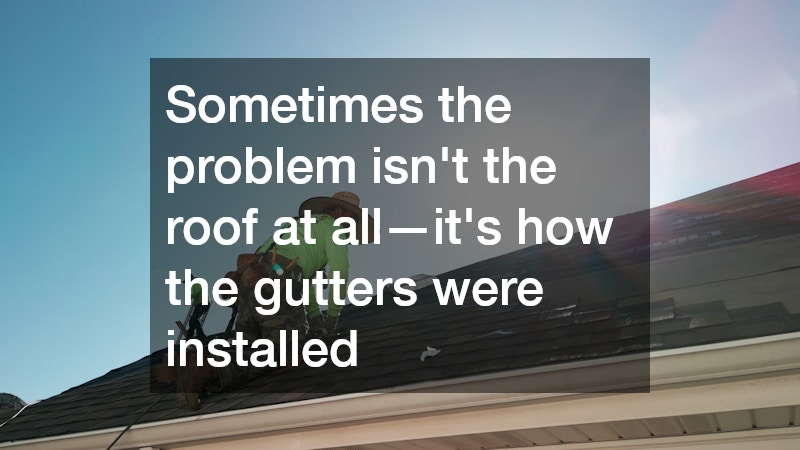
Sometimes the problem isn’t the roof at all—it’s how the gutters were installed. If gutters are placed too far away from the roofline or not aligned correctly beneath the edge of the shingles, water will miss them entirely and run behind.
Signs of improper installation include:
-
Gaps between the roof and gutter
-
Gutters installed too low on the fascia
-
Inconsistent pitch or alignment
In these cases, professional adjustment or reinstallation is needed, often along with minor roof repair around the edges to ensure a proper fit.
Clogged Gutters and Downspouts
Even perfectly installed gutters will leak behind if they’re clogged. Debris such as leaves, twigs, and granules from shingles can build up and cause water to pool. Once the water has nowhere to go, it will overflow backward toward the roofline.
Clogged gutters can cause:
-
Water intrusion behind fascia boards
-
Overflow that damages siding and windows
-
Additional roof moisture issues
Cleaning gutters at least twice a year—and more often if you have nearby trees—prevents this problem. If overflow has already caused damage to shingles or fascia, a roof repair may be needed to restore proper drainage.
Sagging or Pulling Gutters
Over time, gutters can sag or pull away from the home due to:
-
Loose fasteners
-
Heavy debris buildup
-
Ice dams
-
Water saturation in fascia boards
When gutters sag, they no longer sit flush against the fascia, allowing water to slip behind them instead of flowing into the trough.
In severe cases, sagging gutters can damage the roof edge or pull fasteners out of rotted wood. This may require both gutter repair and roof repair to reinforce weakened areas and reinstall the system securely.
Damaged or Rotting Fascia Boards
The fascia board serves as the anchor for your gutters. When it becomes rotted or damaged, it can no longer support the gutter system properly, causing gaps where water can leak behind.
Common causes of fascia rot include:
-
Long-term moisture exposure
-
Inadequate drip edge flashing
-
Ice damming
-
Old or deteriorated roofing materials
Fixing fascia damage usually requires removing the affected gutters, replacing the rotted wood, and performing any necessary roof repair to prevent future moisture issues.
Roofline or Edge Damage
Sometimes the issue lies directly with the roof’s edge. Water may be leaking behind your gutters because:
-
Shingles are lifted or missing
-
The underlayment is torn
-
The roof decking is warped or rotted
-
Flashing near the roofline is damaged
Any of these problems can cause water to enter places it shouldn’t, including behind the gutters. If you suspect roof damage, immediate roof repair is crucial to prevent leaks from worsening and spreading inside your home.
Ice Dams During Winter
Ice dams form when snow melts on the warm upper portion of your roof and refreezes near the colder eaves. This creates a ridge of ice that traps water behind it, forcing moisture under shingles and behind gutters.
Ice dams can cause:
-
Water stains on ceilings and walls
-
Soaked insulation
-
Damaged shingles
-
Overflow behind gutters
Preventing ice dams involves improving ventilation and insulation in the attic. However, if the roof decking or shingles have already been compromised, a roof repair will be necessary after addressing the ice issue.
Roof-to-Gutter Mismatch
In some cases, the slope or design of the roof may cause water to overshoot or bypass the gutters entirely. This is common with:
-
Steep roofs
-
Metal roofing that sheds water quickly
-
Homes without gutter extensions or guards
When water overshoots, it can run behind or around the gutter system. Adjustments to the gutter angle or adding splash guards can help, but significant roof edge issues may require professional roof repair to create proper water flow.
Poor Water Flow on Low-Slope Roofs
Low-slope roofs often struggle with drainage because water moves more slowly. If the roof is even slightly uneven, water can pool and spill behind the gutters rather than flowing into them.
Over time, this pooling can cause:
-
Shingle rot
-
Decking deterioration
-
Fascia staining and water damage
A skilled roofer can evaluate low-slope areas and recommend roof repair solutions such as adding tapered insulation or improving drainage.
Water leaking behind your gutters isn’t just an inconvenience—it’s an early warning sign of roof or gutter failure. Whether the issue stems from missing drip edge flashing, clogged gutters, rotted fascia, or roofline damage, the longer it’s ignored, the more severe the damage becomes. Addressing the problem promptly with professional roof repair ensures your roofing system stays durable, efficient, and watertight. With regular maintenance and the right repairs, you can protect your home from costly water intrusion and maintain the strength of your entire roof-gutter system.